Monday, April 10, 2006

The Way of Taiko reviewed at Japan Visitor


Japan Visitor reviews The Way of Taiko: "For those with even a passing interest, this is a lovely little book. Written in an easy-to-understand style, this is a perfect primer."

Read the review

Thursday, April 06, 2006

The Spirtit of Taiko to be screened at Portland Taiko

On April 12 Portland Taiko is screening The Spirit of Taiko. After the screening, there will be a short program in which filmmaker Gayle Yamada will be interviewed by the Executive Director of Portland Taiko. The Spirit of Taiko features Seiichi Tanaka who wrote the foreword for The Way of Taiko.

The Spirit of Taiko will be aired on public television throughout the country this year. Check your local listings!

Wednesday, April 05, 2006

Tuesday, April 04, 2006

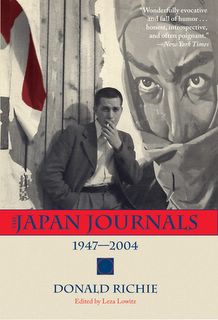
The Japan Journals reviewed at Reader Views


Reader Views has posted its review of The Japan Journals: 1947-2004 by Donald Richie:

"Sure, this book can be taken as the history of a changing Japan during an integral fifty years. More, it should be taken as the history of a changing man who happens to live in Japan while history marches on."

Read the entire review

Monday, April 03, 2006

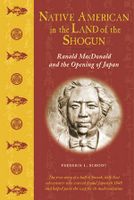
Asiatic Society reports on Frederik L. Schodt's lecture


The Asiatic Society of Japan has already released the notes on Frederik L. Schodt's speaking event on March 20:

March Meeting

The Czech Ambassador, H. E. Mr. Karel Žebrakovský, had kindly invited the Society to hold its March meeting in the embassy's very comfortable cinema hall. On this occasion we were also happy to have with us the Canadian Ambassador, H. E. Mr. Joseph Caron, and Mrs. Caron.

The speaker was Mr.
Frederik L. Schodt, a graduate of ASIJ and ICU, as it happened, who had chosen to give us the outline of his latest book, Native American in the Land of the Shogun: Ranald MacDonald and the Opening of Japan, which was twelve years in the researching and writing, and last year was named an Outstanding Academic Title by Choice Magazine. (He presented a copy of this book to your secretary to help in the writing of this summary, and it will be passed on to the ASJ library in due course.) Mr. Schodt's presentation held his audience spellbound, illustrated throughout, as it was, by slides.

Ranald MacDonald, who was remarkable for coming to Japan five years before Perry and teaching English to an interpreter who would play an important role when Perry did come, was born in Fort George, Astoria, in 1824, the son of a Scotsman, Archibald McDonald, an officer of the Hudson's Bay Company, which virtually operated as an independent state in an area ranging over what is now Washington and contiguous regions, and set up various "forts" of which Fort George (built by earlier traders as Fort Astoria) was one; a monument to Ranald now stands in the partial reconstruction of the original Fort Astoria. His mother was a daughter of the Chinook Chief Comcomly, but she died soon after he was born. The Company then set up its main base in Fort Vancouver, further up the Columbia River, and after moving here Archibald met and married Jane Klyne, whom photographs show to have been a "Métis" (like a Spanish mestizo - the traders had no white women with them). This was the place where Ranald acquired his first rudimentary education.

Around this time, three Japanese drifters (hyôryûsha) were cast ashore near Cape Flattery, and made their way to the neighbouring Ozette. From there they were taken to Fort Vancouver, and the chief factor there, John McLoughlin, sent them home on a roundabout route via Hawaii, London and China; however, they were barred from coming home by Japan's Seclusion Laws, and all died abroad. It is unlikely that Ranald ever met them, but his interest in Japan was undoubtedly stirred by hearing of their story.

At the age of ten, Ranald was sent to the Red River Settlement (now absorbed into Winnipeg) to receive a better education; this community in "Rupert's Land" had churches and schools. Then in 1839 Archibald, having greater ambitions for him, sent him on to a friend in St. Thomas (near London, Ontario), Edward Ermatinger, to be apprenticed to his business. However, Ranald did not take to this arrangement, and ran away and went to sea. In 1842 we find him in Sag Harbor, on Long Island, aboard a whaler. By this time whalers had fished out the Atlantic, and moved to the Pacific, including the area north of Japan. There was one Captain, Mercator Cooper, who picked up a number of Japanese sailors and successfully put them ashore in Tokyo Bay. (Another Japanese drifter picked up by a whaler was the famous "John" Manjirô Nakahama, and Ranald must at least have heard of him, as Manjirô was taken to Fairhaven, Massachusetts.) In 1846 Ranald arrived in Lahaina, in the Hawaiian Islands, aboard the Plymouth, and must have heard there about Captain Cooper. On Lahaina there was a missionary doctor, Dwight Baldwin, and his mission contained reading matter for seamen, such as newspapers and books, some of which carried information about Japan. At one stage Baldwin had hosted shipwrecked Japanese sailors, and had tried to learn their language.

In Honolulu there was a missionary, Samuel Damon, who was a chaplain to seamen and published a newspaper, The Friend, which printed the story of Captain Cooper and of other shipwrecked Japanese sailors, and also of Americans shipwrecked in Japan. Damon was becoming increasingly interested in Japan, and feeling that the time must come when the country would be opened up, first to trade and then to missionary work. Another paper, The Polynesian, carried accounts of foreign ships being provided with food and water in Japan, although their crews were not allowed to land - this representing an easing of the seclusion policy which had been initiated in 1842. These accounts Ranald read, and they must have stimulated his determination to make a landing in Japan, which was also spurred by a love of adventure.

Late in 1847 the Plymouth set out on a voyage to Hong Kong and Japanese waters, and in June 1848 the ship arrived off the west coast of Hokkaido. There Ranald got the captain to cast him adrift in a small boat, with food and water and a chest full of his books, including a Bible. He landed first on a small island called Yagishiri, and finding no people there he made for Rishiri, further north. When he landed he was met by Ainu, who, as was their duty, handed him over to the Japanese authorities. He was taken to the Japanese outpost of Sôya, on the northern tip of Wakkanai, and from there to the administrative centre of Matsumae, on the extreme south-western tip of Hokkaido, all the time keeping up his story that he had been shipwrecked. (There were other American sailors imprisoned there, and one slide showed a Japanese sketch of one of them, named "George".) Eventually he was transported to Nagasaki, to which there was a degree of access granted to Dutch traders, and from which foreign nationals could be deported on Dutch ships, and there he was imprisoned and interrogated, through the use of the professional "Dutch interpreters", of whom a young man, Einosuke Moriyama, proved to be able to understand English to some degree. Interesting Japanese records of the interviews survive, and in one slide could be seen, for example, the katakana "Roburutsurando" for "Rupert's Land". The Japanese found he was not rough and tough like the usual sailors they had to deal with, and as they were now discovering that English was the predominant international language, and the interpreters were desperate to learn it, they made use of him as a teacher, with Moriyama as his star pupil. Ranald also made efforts to learn some Japanese, and another slide showed a word list he had made, with the Japanese written in his own system of romanization, with silent vowels not recorded, thus fta for futa. The Chinese temple where he was kept has been identified in recent times, and a monument to him now stands close by.

In April, 1849, the U.S.S. Preble, captained by Commander James Glynn, arrived, with orders to repatriate any U.S. seamen they found there, and Ranald was one of them. His movements over the next four years are unclear, but he travelled by way of Hong Kong, Australia and the various capitals of Europe before reappearing in North America in the spring of 1853. This was the year in which Perry first came to Japan with certain demands, returning the next year to negotiate them. The negotiations were officially conducted in Dutch and Chinese (Perry brought interpreters with him), but men like Moriyama were able to use their English informally to establish friendships. Thus Ranald contributed indirectly towards the establishment of international contacts and the modernization of Japan.

After returning home he seems first to have gone to British Columbia to join in the gold rush. In 1864 he played a leading role in the Vancouver Island Exploring Expedition, but by 1885 the wanderlust had finally run out, and he settled down near the old Fort Colvile, close to what had now become the modern national border north of Spokane, and died there on August 5th, 1894. He was buried in an Indian cemetery at Toroda, near Curlew, Washington.

There followed a number of questions, to which Mr. Schodt gave very full answers. One questioner asked whether, during his interrogations, Ranald ever said that he had entered Japan voluntarily. Mr. Schodt said that he did not. He also speculated on what may have been Ranald's reasons for coming - to become an interpreter, to make his fortune, to proselytize. Another questioner asked what books he might have read in North America to make the racial connection between Native Americans and the Japanese. The speaker said that we cannot be sure, but as the Hudson's Bay Company's records were extremely meticulous he had been able to establish that in their library there were books on Japan by William Broughton and also by Russian explorers such as Vasilii Golovnin and also Georg Langsdorff (the German physician who accompanied Nicolai Rezanov in 1804). He added that the officers of the Company held the racial connection as a common theory and saw a particularly strong resemblance between the Native Americans of the Pacific North West and Asians, with their shorter stature and broader faces than the Plains Indians. Mr. Schodt quoted a letter written by Ranald to Samuel Damon from Hong Kong in 1849, in which he mentions his complexion as being one reason why he went to Japan. A question was asked about whether there were a lot of shipwrecked Asians washed up in the Americas. Indeed there were, especially in the North West but also in Mexico; one group arrived in Santa Barbara, in California, believing they were near Nagasaki! Some did even eventually make it back to Japan. Many of these are detailed in Katherine Plummer's The Shogun's Reluctant Ambassadors. (See her account of one of them in Series III, Vol. 19, 1984, of the Transactions.)

The meeting closed with a vote of thanks proposed by ASJ Council Member Keith McPhalen, who commended the speaker's ability as a writer to look ahead and find something new to write about that would afterwards become a popular topic. This book on Ranald MacDonald was expansive in its aims and provided something deeply gripping to the reader.

After the meeting the ambassador invited those present to stay and partake of drinks, including Czech beer.


"Bulletin" of the Asiatic Society of Japan, No. 4, April 2006.

Friday, March 31, 2006

Tokyo writers show at Frederik L. Schodt's book signing


People attending Frederik L. Schodt's reading and book signing at Good Day Books in Tokyo (March 19) also saw several other authors. In this photo, left to right: Mark Schreiber, Leonard Koren (visiting from San Francisco), Frederik L. Schodt, Steve Kott (owner of Good Day Books), Leza Lowitz, and Shogo Oketani.

70 Japanese Gestures reviewed at ActiveAnime

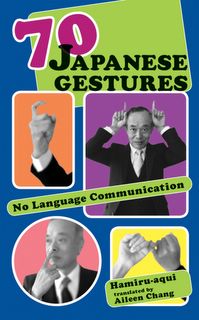
ActiveAnime.com, in its review of 70 Japanese Gestures: No Language Communication, calls the book "...A comedic and fun look at body language while still being very informative. Definitely a book of interest to people well versed in Asian cinema, anime and manga."

New cosplay books set for Spring 2006


Cosplay: The Anime Costuming Handbook

Catgirls and Other Critters
by Gerry Poulos
80pp, 7 x 9", paper, 75 color photos and illustrations, ISBN 1-933330-02-3, US$16.95

School Girls and Uniforms
by Gerry Poulos
80pp, 7 x 9", paper, 75 color photos and illustrations, ISBN 1-933330-03-1, US$16.95

Tuesday, March 28, 2006

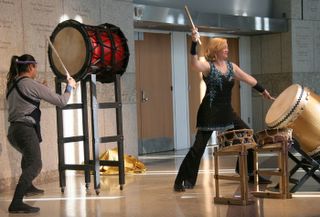
Taiko a hit at Bay Books


Here's a recent email from Diane Tassel of Bay Books about The Way of Taiko author Heidi Varian's store performance on March 23:

"...An awesome performance. Heidi and David and their crew were utterly fantastic. I knew that they would be good but they are beyond good. Heidi has such great facial expressions to go along with her wonderful storytelling. We are already talking about another event in the summer -outside- and asking the local Barbeque rib restaurant to cater."

You read it here first -- taiko and BBQ!

Monday, March 27, 2006

Publisher Peter Goodman to be a guest on Forum


Stone Bridge Press Publisher Peter Goodman will be a guest on KQED's Forum with Michael Krasny. This will take place after 10 am Pacific Time on Wednesday, March 29 and will be archived on the website by the afternoon. You can listen live by visiting www.kqed.org

The discussion is an overview of the publishing industry, with guests from Bay Area small presses (Stone Bridge, Heydey Books), scholarly presses (UC Press, Stanford Press), and larger presses (HarperCollins).

Times-Picayune reviews Becoming Buddha


The New Orleans Times-Picayune reviews Becoming Buddha: The Story of Siddhartha, by New Orleans writer Whitney Stewart and illustrated by Sally Rippin. The book is published by Heian, now part of Stone Bridge Press.

Read more about the book.

Friday, March 24, 2006

New Titles for Fall 2006!

SEPTEMBER


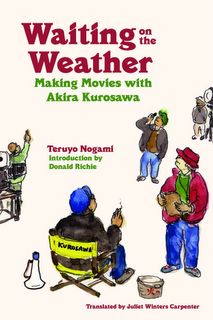
Waiting on the Weather: Making Movies with Akira Kurosawa
by Teruyo Nogami with Foreword. by Donald Richie
Sep, $24.95, Paper, 5.5" x 7.5", 304 pp, 24 b&w illus & photos, 1-933330-09-0


The Care and Use of Japanese Woodworking Tools: Saws, Planes, Chisels, Marking Gauges, Stones
by Kip Mesirow and Ron Herman
Sep, $19.95, Paper, 8.5" x 11", 96 pp, 155 b&w illus,
1-933330-13-9
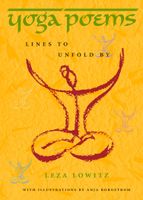

Yoga Poems: Lines to Unfold By
by Leza Lowitz with illus. by Anja Borgstrom
Sep, $9.95, Paper, 5" x 7", 128 pp, 12 b&w illus, 1-933330-11-2
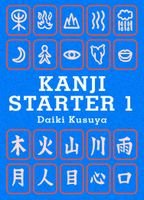

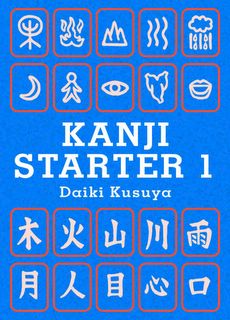
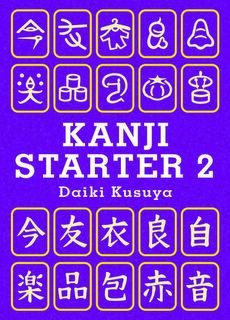
Kanji Starter 1 and Kanji Starter 2
by Daiki KusuyaSep, $9.95, Paper, 4.125" x 5.75"
KS#1: 200 pp, 200 b&w illus, 1-933330-14-7
KS#2: 208 pp, 300 b&w illus, 1-933330-15-5

How to Take a Japanese Bath
by Leonard Koren with illus. by Suehiro Maruo
Sep, $9.95, Paper, 5.5" x 7", 40 pp, 12 b&w illus,
1-933330-08-2

OCTOBER


The Japanese Way of the Artist: Living the Japanese Arts & Ways, Brush Meditation, The Japanese Way of the Flower
by H.E. Davey
Oct, $19.95, Paper, 6" x 7 7/10", 512 pp, 512 b&w illus & photos, 1-933330-07-4


Vietnam Tales of Rabbits and Watermelons
by Masao Sakairi with illus. by Shoko Kojima
Oct, $16.95, Paper, 8.125" x 11.125", 32 pp, 30 color illus,
0-893469-47-5

NOVEMBER


The Anime Encyclopedia, Expanded & Revised Edition
by Jonathan Clements and Helen McCarthy
Nov, $29.95, Paper, 7" x 9", 850 pp, 150 b&w illus,
1-933330-10-4


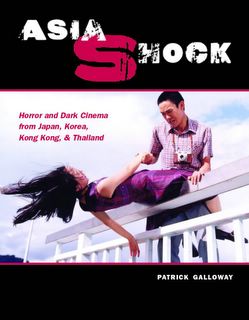
Asia Shock: Horror and Dark Cinema from Japan, Korea, Hong Kong, & Thailand
by Patrick Galloway
Nov, $19.95, Paper, 7" x 9", 248 pp, 50 b&w illus & photos,
1-933330-12-0


Vietnamese Fables of Frogs and Toads
by Masao Sakairi with illus. by Shoko Kojima
Nov, $16.95, Paper, 8.125" x 11.25", 32 pp, 30 color illus,
0-893469-48-3

DECEMBER


Divining the Asian Zodiac: Ancient Guide to Life and Love
by Fumio Shiozawa
Dec, $18.95, Paper, 8.25" x 9.5", 128 pp, 80 color illus,
0-893469-49-1

Tuesday, March 21, 2006

New Stone Bridge Press catalog is online!


The 2006 catalog is now online! Check out the upcoming titles, the latest titles, and the growing backlist that make up some of the best writing on Japan. You'll need Acrobat Reader which you can get for free.

Monday, March 20, 2006

70 Japanese Gestures and jrock, ink. reviewed in Protoculture Addicts


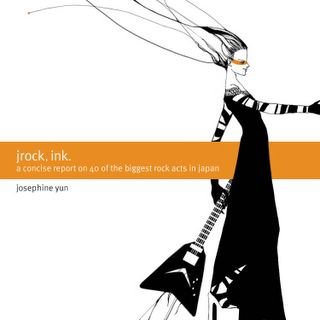
Issue #87 of Protoculture Addicts reviews both 70 Japanese Gestures: No Language Communication and jrock, ink.: a concise report on 40 of the biggest rock acts in japan.

Of 70 Japanese Gestures: "It may not be that useful to know how to silently say 'Your underwear is showing' but the book is an easy reading (lots of pictures) and it's the kind of useless knowledge that is fun to show off at parties! 4 Stars"

Of jrock, ink.: "Josephine Yun's book is a welcomed addition on the subject as it brings updated information and a breeze of fresh air...an essential reference on J-rock. 3 1/2 Stars"

SBP at New York Comic-Con


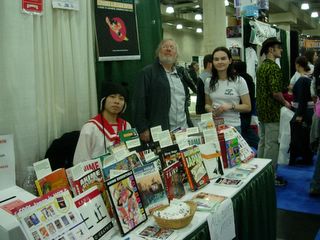
Stone Bridge Press had a great time at the New York Comic-Con! It was packed (as you may have heard) and even our little booth had big interest. We gave away free temporary tattoos, offered a drawing to win 20 of our pop-culture titles, and by Saturday evening started selling our display books for half-price so we didn't have to haul them back.


From left to right: Wei, Peter, and Jaime (in her cool shirt). Photo by Vanessa.


From left to right: Wei and Vanessa. Photo by Jaime.

Sacred Sanskrit Words reviewed at Online Yoga Magazine


Online Yoga Magazine in Ireland reviews Sacred Sanskrit Words for Yoga, Chant and Meditation:

What are the meanings and etymology of commonly used Sanskrit terms such as Ashram, Bandhas, Karma, or Nadis. Or rarer words like Amrita (a brand of ayurvedic products, but what else?), Kripalu ((the term is used for a style of yoga in the US, but where does it come from?) , or Mukti (as in, Jiva Mukti, but what does it mean?). The answers to these questions are in this small book, which covers 160 common Sanskrit terms used in yoga and meditation. The book also has a section on Chants, which covers most of the classic yoga chants that dedicated students will often have heard without knowing what they mean.

While a number of books on yoga include a glossary, this book goes much farther, and will prove invaluable to serious students of yoga, Indian philosophy, or meditation
.

Friday, March 17, 2006

Publisher Peter Goodman interviewed at Toon Zone

Toon Zone interviews Stone Bridge Press Publisher Peter Goodman about the New York Comic-Con, which Stone Bridge attended, having a big drawing to win 20 books and giving away temporary tattoos that read "Cool Japan" and "I (Heart) Neo Tokyo."

TZ: What did you think of the con?
PG: I thought it was a great con. We had low expectations, having gone to a bunch of these things in the past, but this one was terrific. Lots of media people, lots of professionals in the fan, and that's really what we came to see.

TZ: What was the biggest surprise of the con for you?
PG: The crowds. I had no idea that there would be this many people coming. It bodes well for next year.

TZ: Will you come back next year, and what will you do differently if you do?
PG: Yes, we will come back definitely. You really have to make a splash to stand out, so we'd probably have some more fancy giveaways, and I think we'd try to get some more media interviews and participate in some of the panels.

Subway Love reviewed in SOMA Magazine


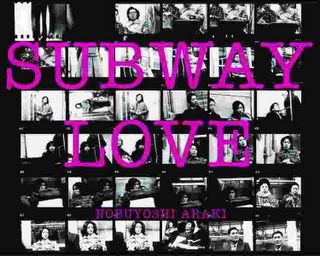
The Vol. 20.2, March 2006 of SOMA Magazine reviews Subway Love:

Between the years of 1962 and 1973 Nobuyoshi Araki hid his camera in his lap and photographed unsuspecting Tokyo subway commuters. In one of the largest metro systems in the world Araki satiated his need to view humanity through a lens while managing to exclude the natural relationship of artist and subject. Perhaps this is documentary photography at its best? As a cultural icon in Japan, Araki is the quintessential artistic rebel, the kind that would prefer a reclining nude wrapped in leather and chains with a dark streak of pubic hair glaring back at the viewer sans apology. The problem is this: the only thing that might possibly shock our generation is the actual presence of pubic hair. And so with his new collection of old works, Subway Love might disappoint those fans looking for his trademark grit-and-grime voyeurism. Aside from the occasional woman who has fallen asleep on her way home from work and relaxed her body enough to spread her legs, Araki's collection is dominated by less aggressive portraiture than what has given him his claim in picturing Japan and the Japanese. What makes these mundane subway portraits so special is his approach to acquiring the images through guerilla espionage tactics that are sometimes more compelling that the images themselves. The result: pictures of people going about their daily lives with no clue they're on camera. And while this might seem like an outdated mode of self-awareness in this day and age, it remains a truer vehicle for pure, unadulterated voyeurism. Here Araki creates a picture for us, where the bond lays not between artist and subject, but artist and viewer. Before us is someone unaware -- Araki has offered them up and we can stare as long as we like without the dark sunglasses. Danielle Grant

Light from the East reviewed in Midwest Book Review, and check out the goods!


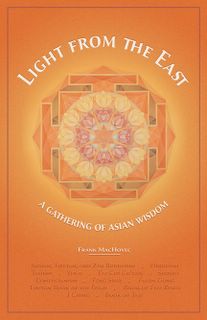
MBR: Small Press Bookwatch reviews Light from the East: A Gathering of Asian Wisdom:

Light from the East by Frank MacHovec is the comparative and informative depiction of the eastern philosophical intrigues to those of the western. As an incredible guide to the eastern and Asian Ways are an all-together work of unity, Light from the East enlightens its readers to the whole spectrum of Taoism, Zen Buddhism, Hinduism, Yoga, Confucianism, Feng Shui, T'ai Chi Ch'uan, Falun Cong and Shinto perspectives. Light from the East is an invaluable general reference to the intricacies of the Eastern Ways, and for that reason, is highly recommended to students of any eastern philosophies, religions, or to readers seeking a desirable religion or philosophical perspective suitable to themselves.

Also, Stone Bridge Press has a new store up at Cafe Press featuring shirts, hats, and bags with various symbols from Eastern philosophy. Check them out at http://www.cafepress.com/stonebridgeligh