Thursday, February 16, 2006

The Midnight Eye Guide and The Way of Taiko reviewed at Pacific Dreams


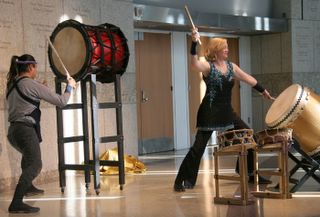
Pacific Dreams calls The Midnight Eye Guide to New Japanese Film "...The perfect balance between the often-seen style-over-substance Japan pop culture books, and the heavy text-only motion picture history books" and The Way of Taiko a "terrific book."

Read the review for The Midnight Eye Guide
Read the review for The Way of Taiko

Tuesday, February 14, 2006

Get ready for Small Press Month


March is Small Press Month, and Stone Bridge Press is a small press, so naturally, we're going to celebrate March! If you're from a bookstore or a library, check out 10 Things You Can Do. If you're not, check with your favorite bookstores or libraries and see what they are doing. You can also print out this excellent poster featuring a self-portrait of Kurt Vonnegut!

Photographer/Designer Markuz Wernli Saito to speak in Melbourne


Markuz Wernli Saito, photography and designer of Mirei Shigemori: Modernizing the Japanese Garden, will be making his popular presentation, "The Design Process of a Photo Book — Integration of Image and Word" at Apple Mac User Society in Melbourne, Australia. The event takes place Saturday, March 4, from 1 to 2 pm.

LOCATION:
Apple Mac User Society Melbourne, AUSOM
Box Hill TAFE, Auditorium
Cnr Whitehorse Rd and Elgar Rd
Box Hill, Melbourne, VIC 3128

Transit: Melways 47 B8, Tram stop 56

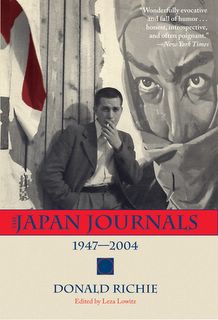
The Japan Journals reviewed in Cinema Scope


Cinema Scope reviews The Japan Journals: 1947-2004: "It's a fascinating read—especially when Richie talks about sex, Japan's erotic culture, and the West’s e(roto)motional tight-assedness—often unsparing and fierce in its judgments, especially about himself. But careful: somebody so open certainly has something to hide. Meet Donald Richie, literary character."

Read the entire review.

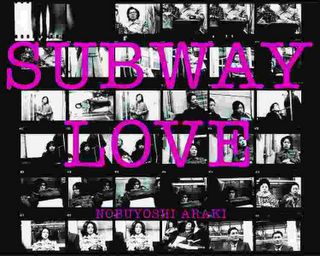
Subway Love reviewed in The Japan Times


In The Asian Bookshelf of The Japan Times, Donald Richie writes of Nobuyoshi Araki's Subway Love: "...One facet of this overwhelming collection of people sitting in the subway is that Araki has given us an almost indigestible slice of humanity. We are on the edge of sociology, maybe even anthropology..."

Read the entire review.

Sunday, February 12, 2006

Wednesday, February 08, 2006

Sneak Peek The Expanded Anime Encyclopdia's review of Howl's Moving Castle


The Anime Encyclopedia, that massive guide that arrived in 2001, is now getting a second edition for later this year! With updated information and added reviews (just think of all that anime from the last FIVE years), The Anime Encyclopedia 2 is working its way through the editorial process, but here is a sneak piece at a new review, which is the newly Oscar-nominated Howl's Moving Castle:

HOWL'S MOVING CASTLE
- Eng. Release?: YES; (2004);
- Jpn: Howl no Ugoku Shiro
- Aka NONE
- Movie.
- Director/s: Hayao Miyazaki
- Screenwriter/s: Hayao Miyazaki
- Designer/s: Hayao Miyazaki
- Animator/s: Akihiro Yamashita, Takeshi Inamura, Kitaro Kosaka
- Music: Joe Hisaishi
- Prd: Studio Ghibli, Gonzo, T2, Production I.G., Madhouse
- Dur: 119 mins

Plain, shy hat-maker Sophie is cursed by the Witch of the Waste to turn prematurely into an old woman. In search of a remedy, she works as a cleaner for Howl, a handsome wizard who, it is rumored, steals the hearts of young girls. Sophie brings a woman's touch to a ramshackle bachelor household, edging her way into the antagonistic world of Howl, his boy apprentice Markl, and Calcifer, the fire demon, whom Howl has bound to the castle's machinery to keep the power flowing. Meanwhile, Howl and several of his pseudonyms are resisting a king's order to fight against the wizards of a rival state. He contends with two women with whom he seems to have a past, the Wicked Witch, whose fading spells cause her to age and collapse into dementia, and Madame Suliman, a government sorcerer who urges Howl to enter royal service.

Hayao Miyazaki's adaptation of the novel by Diana Wynne Jones adds several personal touches, starting with a wheezing comic-relief lapdog. The wholly magical realm of the original novel is given a more modern, steam-based technology, and a new subplot about a distant war, fraught with mixed feelings that appear rooted in Japan's role as bystander and beneficiary to the invasion of Iraq. War breaks out over the search for an important artefact - the infamous real-world "weapons of mass destruction" transformed here into a missing prince, demands for whose return lead to the background conflict. HMC wrestles with the ideas of duty and obligation, and how best to do the right thing in a world gone wrong.

Flushed with international approbation for Spirited Away and Miyazaki's long-deserved Academy Award, HMC was less a movie than a national celebration. On its opening weekend 1.1 million Japanese spent over $14 million -- an opening surpassed only by Harry Potter and the Sorcerer's Stone (2001). Buena Vista invested reverently in the English language adaptation, casting the new Batman Christian Bale, as the selfish Howl, and Billy Crystal in a comic turn as Calcifer. The dub is also tied firmly into America's film heritage with Jean Simmons as the aged Sophie, and Lauren Bacall as the Witch of the Waste.

HMC is a charming film, visually inventive and magnificently crafted. The castle itself is a fabulous creation, like a magic mechanical version of Baba Yaga's Hut from Russian folklore, and the settings are beautifully realized, with the wild mountains and uplands handled particularly well. However, there is a difference between an excellent film and an excellent Miyazaki film. All film
is a collaborative process, but in the best films of a genius one finds a unique creative soul, a way of seeing and showing that can be imitated, but not replicated. Other great Japanese directors, given Ghibli's unrivalled resources, could have made a movie very like HMC; but no one else could have made anything approaching Nausicaa.

HMC was originally intended for another director until Miyazaki stepped in, the legendary perfectionist seemingly unable to let a good idea go to waste, even though he had supposedly retired. The film's hidden message is Miyazaki's love letter to Akemi Ota, the young, hard-working animator girl he married so long ago, a plucky heroine who woke up one day to find herself a glorified scullery maid to a self-absorbed creative, obsessed with distant battles and otherworldly sorceries.

HMC sometimes appears more like the product of a committee rehashing Miyazaki's glory days, heroines confronted by outsized obstacles, contending witches and lead characters unwittingly transformed. This problem may lie in the incorporation of the ideas of other, younger colleagues into what has always been a unique and sometimes an autocratic vision. Similarly, absolute simplicity and innocence are hard to handle realistically - in My Neighbor Totoro they work sublime wonders, but in HMC it leaves the characters alienated from the events around them, like preoccupied children or the "little people" of Patlabor, ignorant of a big picture that is only apparent on repeat viewing.

It may be a tribute to the original novel character, who fed on the souls of besotted young girls, that Howl is Miyazaki's first consciously beautiful male hero, who gets to have Miyazaki's first full-on screen kiss, but he's also the first Miyazaki hero to turn into a conventional father-figure by the end of the movie. By the close of the film, the wild, magical creatures are tamed into an image of a nuclear family. The magnificently depraved Witch is a gentle granny mumbling in a sunny garden, the resourceful Markl a kid teasing an old dog, and the fire elemental a loveably grouchy Disney domestic appliance, as the irresistible wizard steers his companion and the domesticated castle into the happy-ever-after. Compare this with the ending of Princess Mononoke, where San and Ashitaka agree to accept each other's separate needs without compromising their love.

The major Miyazaki themes are still there - integrity, consideration for others, the destructive power of war and greed, ecological awareness, and the synergy of true teamwork. What is lacking is a spark so unique it seems churlish to expect Miyazaki to produce it, on demand, movie after movie; and the supernaturally sure-footed sense of pace and timing that inform his greatest works. HMC is a detailed and generous answer, but so caught up in its own complexity that it seems to have misheard the question.

Monday, February 06, 2006

Free guided tour helps tourists discover more of Akihabara


MSN-Mainichi Daily News reports in "Free guided tour helps tourists discover more of Akihabara" that the tours only last through the month to February 20.

In Tokyo this month? Sign up!

Missing the free tours? Get caught up and take your Cruising the Anime City with you!

Donald Richie mentioned in Newsweek: International Editions


In his article, "Turning Un-Japanese" for Newsweek: International Editions, Christian Caryl mentions Donald Richie, author of several books from Stone Bridge Press, including The Japan Journals:

Donald Richie has been living in Japan for half a century. The American writer, translator and film scholar has spent most of that time explaining Japan to the English-speaking world. But lately he's found himself, somewhat disconcertingly, in an entirely new role—as an interpreter of Japan to the Japanese.

The Tokyo university students who attend his lectures on the great postwar filmmaker Yasujiro Ozu no longer understand the world portrayed in the 1953 classic Tokyo Story. They don't know anything about the family system because the family system doesn't exist anymore," says Richie. "So I have to reconstruct it for them." They can still understand the traditional, intricately polite version of Japanese used in the movies, but that language sounds alien, as if it comes from a "vanished" world, he says.

Thursday, February 02, 2006

Author Patrick Macias interviewed on Anime World Order


Patrick Macias, co-author of Cruising the Anime City: An Otaku Guide to Neo Tokyo, did a 5-hour interview with the folks at Anime World Order. The first part can be heard in the show's most recent episode.

Wednesday, February 01, 2006

Author Frederik L. Schodt to speak, sign books at events in early 2006


Check here for updated information!

Frederik L. Schodt, author of several Stone Bridge Press titles such as Dreamland Japan, American and the Four Japans, Native American in the Land of the Shogun, along with translator of The Four Immigrants Manga and Mobile Suit Gundam, will be speaking and signing copies of his books at a number of events in the upcoming months.

February 17

Mr. Schodt will speak on “The Manga Way” at a symposium called “Marauding Rabbits, Starry-Eyed Girls, Battling Boys, 'Ordinary Ladies': Japanese (American) Manga in Review.” Also speaking is Stan Sakai, Kinko Ito, and Matthew A. Thorn. This event runs all afternoon in room Hahn 101 at Pomona College in Claremont, CA. Please contact Professor Lynne Miyake at 909-621-8931 for more information.

February 22-24

On Thursday, February 23rd, Mr. Schodt will give a lecture entitled, "Manga Here, Manga There, Manga Everywhere." The lecture, which is free and open to the public, will take place at 7:30 p.m. in the Washington-Franklin Room in Washington-Franklin
Hall, located on the Randolph-Macon College campus in Ashland, Virginia. Find more information at www.rmc.edu.

March 9-13

One of the themes of the Honolulu Festival will be Ranald MacDonald, Mr. Schodt’s subject in Native American in the Land of the Shogun. Mr. Schodt will be participating in a seminar about the explorer on March 11. More information about the Honolulu Festival can be found at www.honolulufestival.com

March 20

The Asiatic Society of Japan in Tokyo has invited Mr. Schodt to speak about Ranald MacDonald and the adventures of this man who snuck into Japan when it was completely shut off from foreigners. Find more information at www.asjapan.org

One can only wonder how many frequent flyer points Mr. Schodt will be earning!

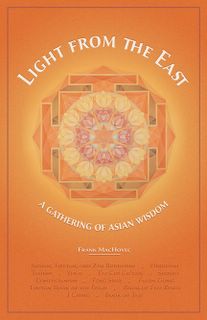
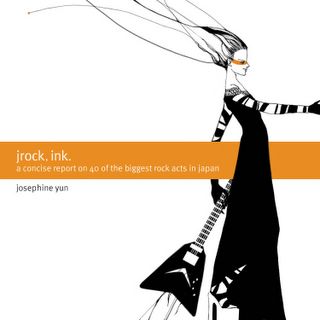
Light from the East and jrock, ink. reviewed in The Daily Yomiuri


The Daily Yomiuri reviews Light from the East: A Gathering of Asian Wisdom by Frank MacHovec and jrock, ink.: a concise report on 40 of the biggest rock acts in japan by Josephine Yun.

Read the review of Light from the East.
Read the review of jrock, ink.

Thursday, January 26, 2006

Win 20 books from Stone Bridge Press at the New York Comic-Con!


Stone Bridge Press, publishers of quality books about Japan, currently has 20 titles relating to Japan’s coolest export: pop culture. These books on anime, manga, film, rock music, television, travel and fandom have been powerful resources for fans and industry leaders alike. To celebrate Cool Japan at the first New York Comic-Con, Stone Bridge Press will offer all 20 pop culture titles to one lucky person in a prize drawing.

Drop by the Stone Bridge Press table, #441 on the corner not far from the center of the exhibit hall, to see current titles and learn about new ones on the way, such as two new handbooks for cosplaying and the long-awaited second edition of the classic guide known as The Anime Encyclopedia. Expect to find freebies such as temporary tattoos that reflect the otaku lifestyle, and don’t forget to enter the drawing to win!

The New York Comic-Con takes place February 24-26 at Jacob K. Javits Convention Center. Get ticket information and programming schedules.

Midnight Eye announces anniversary contest


Here is a message from the authors of The Midnight Eye Guide to new Japanese Film:

March 2006 will mark Midnight Eye's fifth anniversary. We plan to celebrate in style with a special edition of the site, the details of which we will keep under wraps for the time being. We also want to use the occasion to launch a new slogan for Midnight Eye. Until now, we've been using 'The latest and best in Japanese cinema,' but we want something fresh, something catchy, something that fits the world's leading publication on Japanese film. And we want you to help us find it! So put your thinking caps on and send in your ideas to:
competition@midnighteye.com
You can send in as many as you like. The winning entry will receive a signed copy of our book.

Dreamland Japan reviewed at Jog - The Blog


In Jog - The Blog's "Eyes turned eastward..." highly recommends Dreamland Japan by Frederik L. Schodt, and provides a full review.

Author Heidi Varian to perform taiko at Bay Books in Pleasanton


Heidi Varian, author of The Way of Taiko, will be performing taiko and signing copies of her book at Bay Books in Pleasanton, CA. The event takes place Thursday, March 23 at 7 pm.

The Way of Taiko reviewed in The Daily Yomiuri


The Daily Yomiuri reviews The Way of Taiko by Heidi Varian here. Heidi will also be performing taiko in Healdsburg, California tomorrow.

Author Jina Bacarr to speak in Burbank


Jina Bacarr, author of The Japanese Art of Sex, will be talking about "everything you always wanted to know about geisha" and signing copies of her book. This will take place on February 18th at 1 pm at the Cheers for Writers book club, a group that meets once a month at the Barnes & Noble in Burbank, California.

The Dorama Encyclopedia reviewed in Fortean Times


Fortean Times reviews The Dorama Encyclopedia: A Guide to Japanese TV Drama Since 1953 by Jonathan Clements and Motoko Tamamuro.

"Who knew reference books could be this fun!"

Friday, January 20, 2006

Author Gil Asakawa to speak at Day of Remembrance in Chicago


Gil Asakawa, author of Being Japanese American: A JA Handbook for Nikkei, Hapa...& Their Friends, will be a guest at the Japanese American Citizens League Chicago Chapter Day of Remembrance event on Sunday, February 19. It will take place at 2pm at DeVry Institute on 3300 North Campbell Avenue in Chicago. This event is part of an annual commemoration of the signing of Executive Order 9066 and World War II internment. Gil will be moderating a panel discussion.

Light from the East reviewed in Foreword Magazine


Foreword Magazine's January/February 2006 issue reviews and recommends Light from the East: A Gathering of Asian Wisdom as part of its Mind/Body/Spirit special.

Donald Richie books reviewed at Movie Poop Shoot


Movie Poop Shoot discusses Donald Richie's book and films in "Nocturnal Admissions." D.K. Holm calls The Donald Richie Reader: 50 Years of Writing on Japan, "...An excellent survey of his entire career" and The Japan Journals: 1947-2004 "Fascinating."

Friday, January 13, 2006

Otaku Unite! on DVD soon

Otaku Unite! will soon be released on DVD by Central Park Media. This documentary of otaku culture in North America features interviews by many Stone Bridge Press authors.

Thursday, January 12, 2006

Thursday, January 05, 2006

Author Heidi Varian to appear on Sacramento and Company


The Way of Taiko author Heidi Varian will be interviewed on the TV show Sacramento and Company on January 13. She will not only talk about taiko and her book but also perform taiko on the show. Later that day she will perform taiko at Leroy Greene Middle School in Sacramento, CA.

Author Gil Asakawa offers travel tips in Nikkei Family


Nikkei Family: A National Publication of Japanese American Lifestyle and Culture, Vol. 5 Issue 1, offers travel tips to Japan from Gil Asakawa, author of Being Japanese American: A JA Sourcebook for Nikkei, Hapa... & Their Friends. Tips include how to get the right kind of gifts for your homestay family and how to pick the language aids for understanding Japanese.

Check out the Stone Bridge Press shop at CafePress!


It's still under construction, but the Stone Bridge Press shop at CafePress is up and offers various items featuring the Stone Bridge logo and images from Cruising the Anime City and Light from the East. We just received the pictured Jr. Baby Doll T-shirt and it looks great!

Author Leza Lowitz recommends books in The Daily Yomiuri

In "Sensuous pleasures of mind, body, page," SBP author Leza Lowitz offers up what she read in 2005 to The Daily Yomiuri as part of its year-end special.

Midnight Eye and Japan Journals reviewed in Graduate Journal of Asia-Pacific Studies


In Graduate Journal of Asia-Pacific Studies, Chris Payne reviews both The Midnight Eye Guide to New Japanese Film and The Japan Journals: 1947-2004 which you can immediately read as a PDF here.

Author Gilles Poitras interviewed at LO Magazine


LO Magazine interviews author Gilles Poitras about The Anime Companion 2: More... What's Japanese in Japanese Animation?, his anime/manga fandom and interest in Japan, and the classes he taught at Pixar.